PoolyPress is an open-source content platform for makers, small companies, and developers who need media management, publishing, i18n, and e-commerce — without the plugin sprawl of a traditional CMS.
It grew from 20 years of building on Joomla, Drupal, WordPress, Jekyll, Hugo, and Astro. The result is a single, self-contained Node.js stack with minimal dependencies that runs comfortably on a €5/month VPS.
First release is planned for May - 2026
Core Capabilities
📸 Media Management & Delivery
Upload-to-publish pipeline with automatic format conversion, responsive sizing, and video transcoding.
- Media Processing: Images are converted to WebP/AVIF on ingest. Video is transcoded for adaptive bitrate playback. No external CDN or image service required.
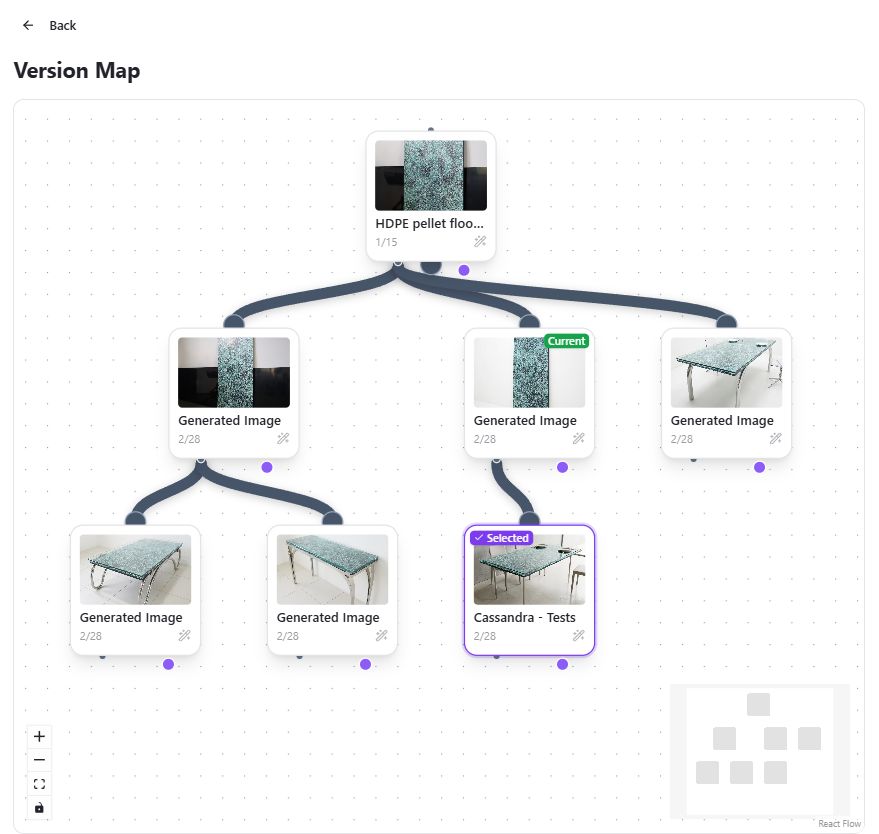
- Galleries & Versioning: Manage multiple image versions, navigate via filmstrip, and reorder assets with drag-and-drop.
- Virtual File System (VFS): An abstraction layer over local and remote storage with configurable mounts, per-user directories, ACL-controlled access, and path-traversal protection.
📱 Mobile & PWA
The frontend is a full Progressive Web App — installable, offline-capable, and shareable.
- Installable PWA: Add to home screen with service-worker precaching for instant load on subsequent visits.
- Share Target API: Share content from any mobile app directly into PoolyPress for quick posting.
- Global Drag-and-Drop: Drop files or URLs anywhere on the page to start a new upload or post.
✍️ Content & Publishing
Widget-based pages with rich export options and aggregated feeds.
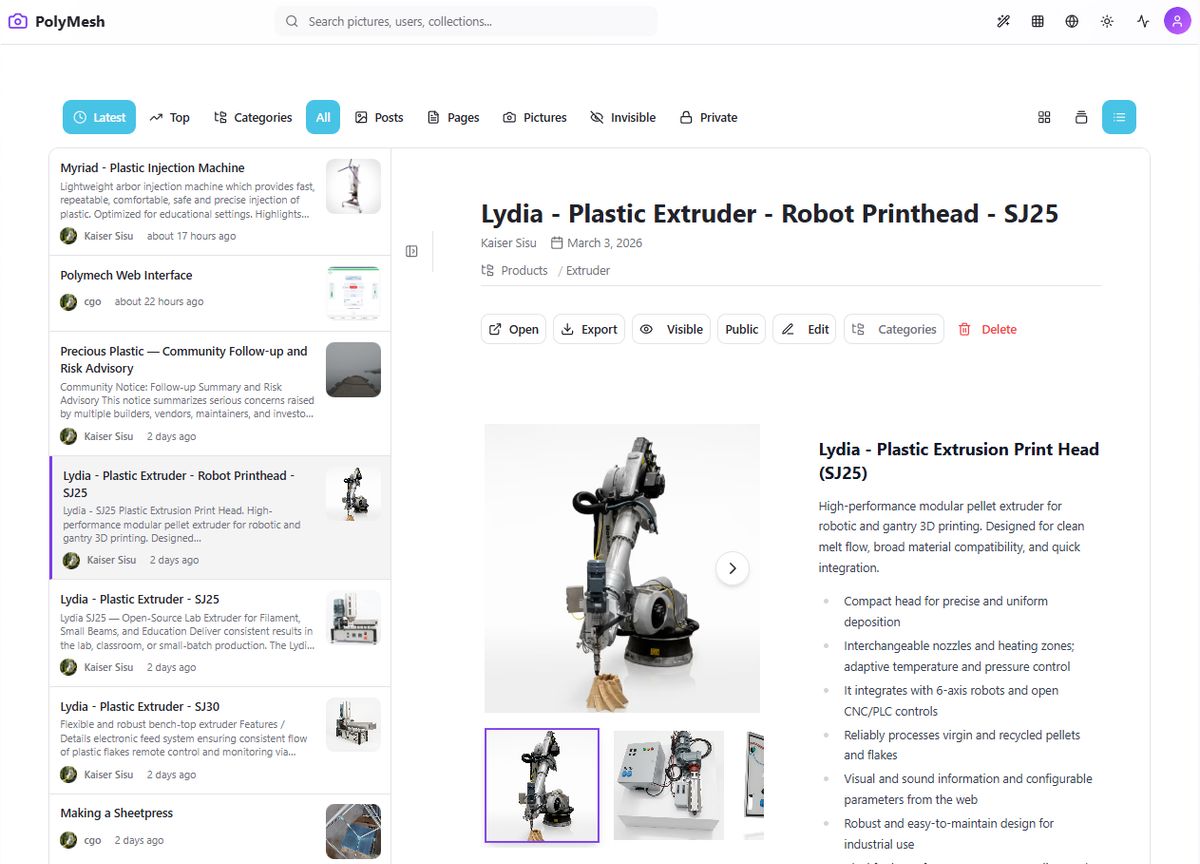
- Block Editor: Build pages from composable widgets — markdown blocks, galleries, video banners, carousels, tabs, and custom embed types — using an MDX-powered editor.
- Export Formats: Pages export to standalone HTML, PDF, Markdown, JSON, or email-ready HTML.
- Discovery Feeds: Aggregated home feeds with full-text search, tag/category filtering, and configurable sort orders.
🌍 Internationalization
Widget-level translations, not page duplication. Update one paragraph without touching the rest of the layout.
- AI & DeepL Batch Translation: Translate content in bulk using DeepL or LLM-powered pipelines. Markdown formatting, links, and structure are preserved.
- Per-Widget Granularity: Every widget, title, and description is independently translatable. No duplicate pages, no sync headaches.
- Locale-Aware SEO: Automatic hreflang tags, per-language sitemaps, and translated meta descriptions.
🔍 SEO, Discoverability & AI-Readiness
Traditional SEO gets your pages indexed. But search is changing: Gartner forecasts a 25% drop in traditional search volume by 2026 as users shift to AI assistants for direct answers. PoolyPress addresses both worlds.
Classic SEO — Built In
- Structured Data: Open Graph, Twitter Cards, and JSON-LD schemas (Article, Product, FAQPage, BreadcrumbList) are injected server-side. Link previews work correctly on every platform.
- Performance: Hydration data is pre-fetched, images are responsively served, and route-level code splitting keeps initial payloads small.
- Syndication: Built-in RSS/Atom feeds and auto-generated Google Merchant XML product feeds.
- Locale-Aware: Automatic hreflang tags, per-language sitemaps, and translated meta descriptions.
Bot & Crawler Detection
The server identifies crawlers at the request level using two-tier User-Agent detection:
- AI Agents: GPTBot, ChatGPT-User, ClaudeBot, Google-Extended, Gemini-Deep-Research, PerplexityBot, Applebot-Extended, DuckAssistBot, MistralAI-User, and others — each recognized individually so the server can tailor the response format.
- Traditional Crawlers: All remaining bots (Googlebot, Bingbot, etc.) are caught via the battle-tested
isbotlibrary.
When a bot is detected, the server renders full static HTML with JSON-LD, Open Graph tags, and pre-rendered widget content — no JavaScript required. AI agents receive clean Markdown with frontmatter metadata instead. Human visitors get the standard SPA experience. Same URL, three response paths.
Answer Engine Optimization (AEO)
AI-driven search engines (Google AI Overviews, ChatGPT, Perplexity, Bing Copilot) increasingly serve direct answers instead of link lists. To be cited by these systems, content needs to be structured for extraction, not just ranking.
- Multi-Format Delivery: Every page is available as HTML, Markdown, JSON, or plain text via URL suffix — AI agents can retrieve content in their preferred format without scraping.
- LLM Endpoints: Machine-readable indexes (llms.txt, sitemap-based manifests) let AI systems discover and ingest your content programmatically.
- Semantic Structure: Widget-based layouts produce clean heading hierarchies, Q&A blocks, and structured specs tables that map directly to the entity-type extraction LLMs perform.
WebMCP — The Agentic Web
Google and Microsoft are incubating WebMCP at the W3C — a browser-native standard that lets AI agents call website functions directly via navigator.modelContext, rather than scraping HTML or interpreting screenshots. Chrome 146 Canary shipped an early preview in February 2026.
Why it matters for content publishers: as AI agents start transacting with websites on behalf of users, the sites that expose structured tool contracts will be reachable. Sites that don't become invisible to the agentic web.
PoolyPress is built for this shift. Its existing MCP server already exposes 17 tools over JSON-RPC 2.0 for content authoring. The same architecture — structured tool definitions, typed inputs, programmatic responses — aligns directly with WebMCP's declarative and imperative APIs. When browsers ship WebMCP support, surfacing PoolyPress capabilities to client-side AI agents is a configuration step, not a rewrite.
🛒 E-Commerce (Optional Module)
Any page or post can be turned into a product by tagging it with a price — no separate product database needed. This covers physical goods with cart, checkout, shipping, and returns, but also digital products: tag a VFS file or folder with a price, and the platform's ACL system handles access control automatically. Buyers get a scoped VFS grant; non-buyers see the listing but can't download. The same granular permissions that protect internal documents also gate paid content.
All pages marked as a product are automatically included in a Google Merchant XML feed — with pricing, availability, images, and descriptions pulled directly from the page's metadata. No manual feed management, no third-party plugin.
🤖 AI-Powered Authoring
AI tools are built into the editor, not bolted on.
- Chat Panel: An in-editor AI assistant that can search your site's own content, draft text, insert widgets, and cross-link existing pages.
- Inline Tools: Rewrite, expand, summarize, or translate selected text without leaving the editor.
- Layout Generation: Describe a page layout in plain language and the AI generates the widget structure, pre-filled with your page's template variables.
🛡️ Security
Layered security applied consistently across all endpoints.
- Auth & Access Control: JWT authentication, declarative route-level access (
@Public,@Admin), and role-based admin privileges. - Auto-Ban & Rate Limiting: In-memory violation tracking with configurable thresholds. Offending IPs, user IDs, or tokens are banned automatically.
- Transport Hardening: Strict CSP, CORS, and secure headers to mitigate XSS, clickjacking, and CSRF.
- Observability: Real-time request logging, background geo-lookups, and SSE-based live monitoring.
Editable Home & User Profiles
Home and user pages use the same widget system as content pages — no rigid templates.
- Layout Modes: Switch between grid, list, and large gallery views per feed.
- Widget Registry: Drag and drop media sliders, text blocks, and interactive elements onto any page from a shared registry.
- Responsive: All layouts adapt to mobile, tablet, and desktop without separate configuration.


AI-Assisted Content Creation
AI tools are integrated at every stage of the authoring workflow — drafting, layout, and editing.
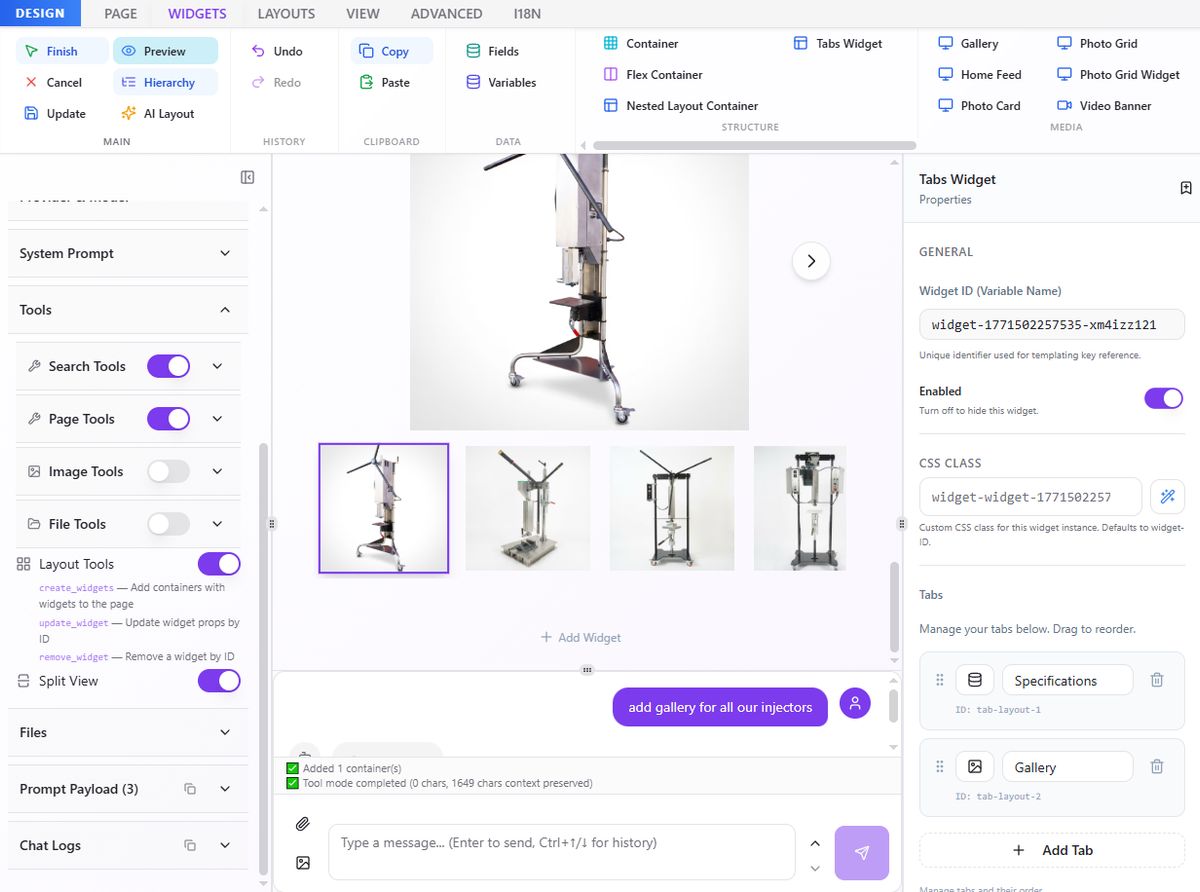
- Chat Panel: A context-aware chat interface inside the editor. The AI can search your site's content, draft paragraphs, insert gallery widgets, and link to existing pages and categories — all from the conversation.
- Layout Wizard: Describe what you need — "a product page with a hero image, 2-column spec grid, and a FAQ section" — and the AI generates the matching widget containers, pre-filled with your page's live template variables.
- Inline Editing: Select any text in the editor and rewrite, expand, summarize, or translate it in place.


AI Image Wizard
A built-in studio for generating, editing, and versioning images with generative AI models.
- Multi-Provider: Switch between models (Gemini, OpenAI, etc.) without leaving the editor.
- Grounding & Search: Toggle Google Search or Image Search grounding to improve visual accuracy for real-world subjects.
- Non-Destructive Versioning: Spin off variations (new styles, background removal) while keeping the full iteration history intact.
- Prompt Management: Use built-in prompt templates, save custom presets, auto-optimize rough prompts, and browse your prompt history.
- Workflow Chains: Chain repeatable steps — generate, style, draft metadata, publish — into a single action.
- Quick Presets: Apply style presets (Enhance, Artistic, Cyberpunk, Portrait, etc.) from quick-action buttons below the editor.
Localization & i18n
Translations are managed at the widget level, not the page level. You can update a single paragraph without touching the rest of the layout.
- Widget-Level Translations: Each widget, title, and description is translated independently. No page duplication, no sync issues.
- Batch Translation Dashboard: Filter by entity type (Categories, Pages, Custom Types) and batch-translate missing content using DeepL or LLM-powered pipelines.
- DeepL Glossaries: Create bi-directional glossaries synced with DeepL to keep brand terms and technical vocabulary consistent across languages.
- Markdown & XLSX Support: The pipeline handles formatting-aware markdown (preserving links, images, bold/italic) and supports import/export via Excel spreadsheets.
- TMS Export: Extract content into XLIFF 2.0 or Flat JSON for use in external translation management systems (Crowdin, Lokalise, etc.), then import the results back.


Security & Access Control
The platform applies security policies consistently across all endpoints. Beyond JWT auth and transport hardening, PoolyPress includes a granular Virtual File System (VFS) ACL system.
VFS Access Control Lists
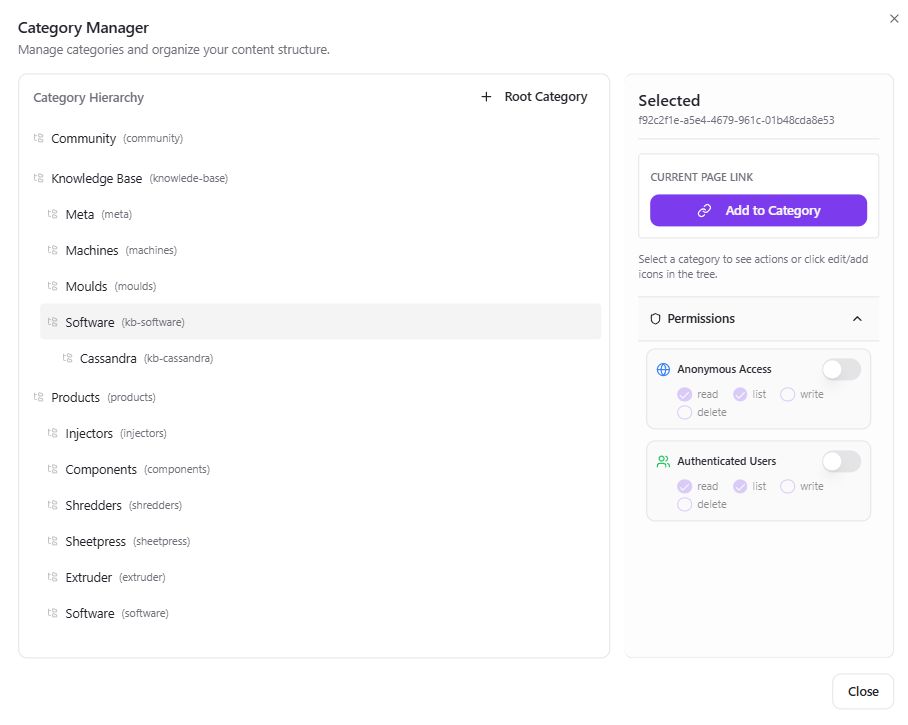
The storage layer implements per-file, per-folder access control.
- Isolated Mounts: Storage is divided into namespaced mounts, each with its own ACL rules.
- Granular Permissions: Grant or revoke
read,write,list,mkdir,delete,rename, andcopyper user, group, or path. - Role Defaults:
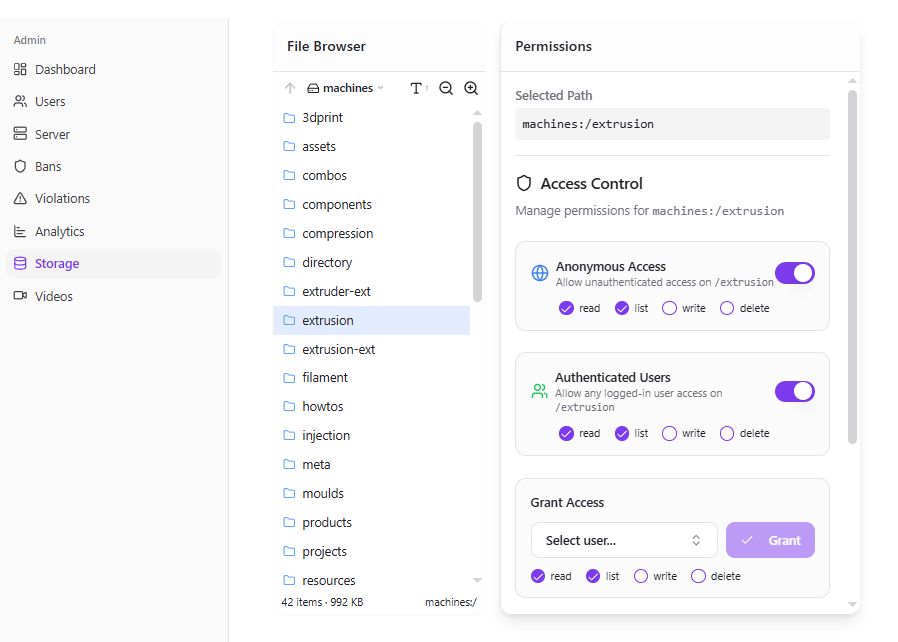
- Anonymous: Configurable baseline (e.g., public read/list).
- Authenticated: Separate baseline for logged-in users.
- Hierarchical Evaluation: A request to
/docs/sub/file.txtchecks grants at each path level (/docs/sub/file.txt→/docs/sub→/docs→/). First match wins. - Visual ACL Editor: Administrators toggle access levels, grant user/group permissions, and revoke active grants through a dedicated UI.
Platform Security Stack
- Auth & Routing: JWT authentication, declarative route decorators (
@Public,@Admin), role-based admin access. - Auto-Ban: In-memory violation tracking. IPs, user IDs, or tokens exceeding rate limits are banned automatically.
- Transport: Strict CSP, CORS headers, and secure cookie flags to mitigate XSS, clickjacking, and CSRF.
- Observability: Request logging with async geo-lookups and SSE-based live monitoring for threat detection.
MCP Agentic Integration
PoolyPress exposes its authoring capabilities as a Model Context Protocol (MCP) server — a single HTTP endpoint that lets AI agents in any MCP-compatible IDE create, search, edit, translate, and publish content programmatically.
How It Works
The MCP server speaks JSON-RPC 2.0 over a single endpoint. No SDK required — any HTTP client that can send JSON can be an MCP client. Authentication reuses existing Supabase JWT tokens.
flowchart TD
  A((Claude Code
Cursor
Windsurf)) -->|JSON-RPC 2.0| B{MCP Server}
  B --> C[Pages & Widgets]
  B --> D[Search & Categories]
  B --> E[VFS & Media]
  B --> F[Translations]
  B --> G[Image Generation]
  B -->|Research queries| H[Research Supervisor]
  H --> I[Site Content]
  H --> J[SerpAPI / Web]
All tools call server-side functions directly — no internal HTTP round-trips. The same caches, ACLs, and visibility rules that apply to the web UI apply to every MCP tool call.
Built-In Research Agents
Beyond content management, the MCP server includes a research supervisor that coordinates multi-source research. It searches your own PoolyPress content alongside the public web (via SerpAPI) to synthesize comprehensive answers — useful for competitive analysis, content gap research, or fact-checking before publishing.
The 17 Tools
| Tool | What It Does |
|---|---|
search_content |
Full-text search across pages, posts, images, and files |
find_pages / find_pictures / find_files |
Type-specific search |
get_page_content |
Fetch a page's full widget tree, markdown, and metadata |
create_page |
Create a new page with title, markdown, category, and tags |
update_page_content |
Replace the primary markdown content of a page |
update_widget / remove_widget |
Edit or delete individual widgets by instance ID |
add_containers |
Append new widget containers (multi-column layouts, photo grids, tabs) |
list_categories / find_by_category |
Browse and query the category hierarchy |
generate_image |
Generate an AI image (Gemini) and upload it to storage |
markdown_scraper |
Scrape any URL into clean Markdown |
get_page_translations / set_page_translations |
Read and write per-widget translations |
get_translation_gaps |
Find pages with missing or outdated translations |
research_supervisor |
Coordinated internal + web research via SerpAPI |
IDE-Native Content Workflows
Connect PoolyPress as an MCP server in Claude Code, Cursor, or Windsurf:
{
  "mcpServers": {
    "poolypress": {
      "url": "https://your-instance.com/api/mcp",
      "headers": {
        "Authorization": "Bearer YOUR_TOKEN"
      }
    }
  }
}
Once connected, you can combine PoolyPress tools with any AI skill — copy-editing, SEO auditing, content marketing — and run them against your live content.
What This Enables
Batch operations no CMS UI can match. A single agent session can audit 50 product pages, fix typos, standardize specs, fill in missing meta descriptions, and translate the results into three languages. Manually, that's days of clicking through admin panels. With MCP, it's one prompt — drawing on hundreds of available skills, internal documents, and web research.
Composability. PoolyPress tools are just functions. Combine them with a web scraper to turn competitor pages into comparison articles. Chain them with image generation to create product pages from a spreadsheet. Mix them with translation tools for a full localization pipeline.
Programmatic content as a first-class workflow. Authors, marketers, and developers all work from the same toolset. The CMS becomes an API you talk to, not a UI you click through.
Example Sessions
Content Audit
"List all products in the 'Products' category, review each page for typos, inconsistent specs, and weak copy — then apply the fixes."
Result: 16 pages audited, 13 updated in one session.
SEO Sweep
"Check all product pages for missing meta descriptions, duplicate titles, and keyword-stuffed headings. Fix them."
New Product Launch
"Create a product page for the new SJ40 extruder. Search existing Lydia pages for the format, generate a hero image, and file it under the Extruder category."
Multi-Language
"Translate the Elena injection machine page into Spanish and German. Keep the specs table formatting intact."
Competitive Research
"Scrape these three competitor pages, extract their feature lists, and draft a comparison article. Publish it to the Knowledge Base."

References & Further Reading
SEO & Search
- Google Patent US12536233B1 — "AI-generated content page tailored to a specific user" (granted Jan 2026). Describes a system that evaluates a landing page's predicted performance for a given user. If the page scores below a threshold (bounce rate, conversion, design quality), Google generates a personalized replacement in real-time — with custom headlines, pre-filtered product feeds, suggested filters, and an embedded AI chatbot. The user may never see the original page. Filed July 2024, granted January 2026, with a parallel European application. (Search Engine Land, Forbes, MediaPost)
- Google Patent US20240256582A1 — "Search with Generative Artificial Intelligence" (published Aug 2024). Covers using generative AI models (GPT-class) to automatically produce summaries of search results — the technical foundation behind AI Overviews.
- WebMCP W3C Incubation — webmcp.dev. Browser-native MCP standard backed by Google and Microsoft. Introduces
navigator.modelContextfor declarative tool exposure and imperative API calls. Chrome 146 Canary preview shipped Feb 2026. - Gartner Forecast — Projects a 25% decline in traditional search engine volume by 2026 as users shift to AI assistants and conversational interfaces.
- AEO (Answer Engine Optimization) — The practice of structuring content for direct extraction by AI search systems (Google AI Overviews, ChatGPT, Perplexity, Bing Copilot) rather than optimizing solely for link-based ranking. Key signals: semantic heading structure, schema markup, multi-format availability, and machine-readable content indexes.
Social Commerce & Network Shopping
The storefront is moving from the website to the feed. By 2026, global social commerce is projected to surpass $2.1 trillion (CAGR 29%), with over $100 billion in the US alone. Platforms are no longer just discovery channels — they're closing the loop from impression to checkout without the user ever leaving the app.
- TikTok Shop — $84.3 billion estimated GMV in 2026, 15 million merchants, 70 million listed products. Half of all US social shoppers are projected to purchase on TikTok by 2026. Live shopping conversion rates (9–30%) dwarf standard e-commerce (2–3%). Product catalogs sync with TikTok's Smart+ campaign engine for automated, personalized video shopping ads.
- Instagram Shopping — 3 billion+ monthly users, 70% engage with shopping features. Professional posts are indexable by Google since July 2025 — making "Social SEO" a distinct channel. Meta is shipping AI-automated ad creation, AR try-on tools, and expanding native checkout to more regions. Meta's roadmap targets "personal superintelligence" for consumer product discovery in 2026.
- Google Merchant Center — remains the central feed hub. Product structured data (JSON-LD) on your pages plus a Merchant Center feed maximizes eligibility for rich search results, Shopping tabs, and Performance Max campaigns. Recent policy updates cover subscription products (March 2026) and Merchant Center for Agencies (US/Canada, March 2026).
- Feed-First Discovery — 70% of global consumers are expected to use social media as their primary shopping channel by 2030. The shift from "search → browse → buy" to "scroll → see → buy" makes structured product feeds, shoppable video content, and platform-native catalogs as important as traditional SEO.
Why it matters for PoolyPress: Every product page is already a Google Merchant XML entry with pricing, availability, images, and descriptions auto-generated from page metadata. The same structured product data (JSON-LD Product schema) that feeds Google Shopping is the foundation for TikTok, Instagram, and Meta catalog integrations. As social platforms converge on standardized product feeds, a CMS that outputs structured product data by default — rather than requiring plugins — is positioned to serve all channels from a single content source.
AI Personal Assistants & Agentic Commerce
The next layer beyond search engines and social feeds is the personal AI agent — software that browses, compares, and transacts on behalf of a user. By late 2026, an estimated 8.4 billion voice assistants will be active globally. The shift from "user searches for products" to "agent shops for user" changes what a website needs to expose.
- OpenClaw — The fastest-growing open-source project in history as of March 2026 (250,000+ GitHub stars). An autonomous AI agent that runs locally on the user's device, managing email, calendars, flight check-ins, and web-based purchases. OpenClaw can browse websites, interact with forms, and trigger automations — making it one of the first mass-market agents that transacts with websites directly. Creator Peter Steinberger was subsequently hired by OpenAI; Nvidia, Tencent, Alibaba, and ByteDance have launched derivative versions. Security remains a concern: the "ClawJacked" vulnerability demonstrated that malicious websites could hijack agent sessions, and China restricted government use in March 2026. (openclaw.ai, Wikipedia, Tom's Hardware)
- OpenAI — ChatGPT as "Super-Assistant" — OpenAI's stated 2026 roadmap is to evolve ChatGPT into a "true personal super-assistant" capable of managing work, health, shopping, personal finance, and everyday decisions. The Assistant API introduces persistent context via Threads and multi-step tool execution — enabling agents that can research products, compare prices, and complete checkouts across sessions. OpenAI targets "AI research intern" capability by 2026 and fully autonomous AI researchers by 2028.
- Google Gemini — Google is replacing Google Assistant with Gemini across all Android devices, with full transition targeted by March 2026. Gemini inherits Assistant's routines, smart home controls, and third-party integrations but adds multimodal understanding and generative capabilities. Already active on Wear OS, rolling out to Google TV and Android Auto. Combined with WebMCP, Gemini agents will be able to call exposed website functions natively from the browser.
- Apple Siri (iOS 27) — Apple's next-generation Siri, expected with iOS 27 in September 2026, will be rebuilt with foundation models partly powered by a $1B/year licensing deal with Google for Gemini. Focus: on-device AI processing for privacy, advanced cross-app context awareness, and a new smart home hub interface. The delayed launch (originally planned 2025) reflects the difficulty of making AI assistants reliable enough for real-world transactions.
What agents need from websites: Structured product data (JSON-LD), machine-readable content (Markdown, JSON), authenticated MCP tool endpoints, and predictable navigation. Agents don't click buttons or parse CSS — they call APIs and read schemas. Websites that only serve JavaScript-rendered SPAs with no structured fallback become invisible to the agentic layer.
Why it matters for PoolyPress: The platform already serves three response paths from every URL (SPA for humans, static HTML for crawlers, Markdown for AI agents) and exposes 17 MCP tools for programmatic interaction. When a user's OpenClaw agent or Gemini assistant needs to browse a product catalog, PoolyPress can respond with structured, authenticated, machine-readable content — no scraping required. The same architecture that serves today's bots will serve tomorrow's personal agents.